The Magic Tree

welcome

The best of the web – magical, mythical and majestical! Fantasy and Mythic websites and materials/downloads. Roleplaying, Tabletop and Esoteric Games.
Showing posts with label Computer RPG. Show all posts

First impressions: Dragon Age: Origins


One of the more interesting games we saw at the recent Game Developer's Conference was a large-scale RPG called Dragon Age: Origins, combining well-trod sword-and-sorcery clichés with an inventively twisting plot and an advanced branching dialog engine (where the main character often affects the story by deciding what to say to other characters).


If all that sounds too "hardcore gamer" for you, that's a shame, although understandable considering the dangerously nerdy Dungeons & Dragons vibe of the game's marketing pitch to date.


Despite the elves, dwarves, and renaissance faire outcasts that populate the game, we could see the heart of a mainstream, Hollywood-style action/adventure beating underneath. The developer, BioWare, is responsible for several big crossover hits, including Knights of the Old Republic (a Star Wars RPG), and Mass Effect, a sci-fi (or is that "syfy," now?) game with some of the best intelligent dialog trees we've seen.


Unfortunately, in the segments BioWare demoed behind closed doors for us, all that inventive, involved gameplay is buried under uptight, wooden characterizations of medieval characters that seem to be trying to do Shakespeare in the Park, or at least the dated, stagy delivery of an old fantasy film.


The problem (and it's an industry wide one) is that while movies eventually evolved a more naturalistic acting style during the 1950s (in films such as On the Waterfront), most video games have never been able to make that leap -- instead of Marlon Brando, they're still doing Basil Rathbone and Errol Flynn.


That aside, we were impressed with the tight interplay between the four members of your band of adventurers -- tact and diplomacy is required to keep friends from becoming enemies. Strategy types will appreciate the combat system, in which one can let allies figure out how to fight for themselves, or program extensive instructions for what to do in specific situations (for example, order an ally to always attack a certain kind of enemy first, or to never use healing items).


We're looking forward to seeing more of this game over the next several months, and Dragon Age: Origins will be available for the PC, Xbox 360, and PS3 late in 2009.

WorldWorksGames to Create 3D Pathfinder Terrain


Regular Releases Bring Adventure Path Encounters to Life

Thu, Feb 5, 2009, 05:54 PM

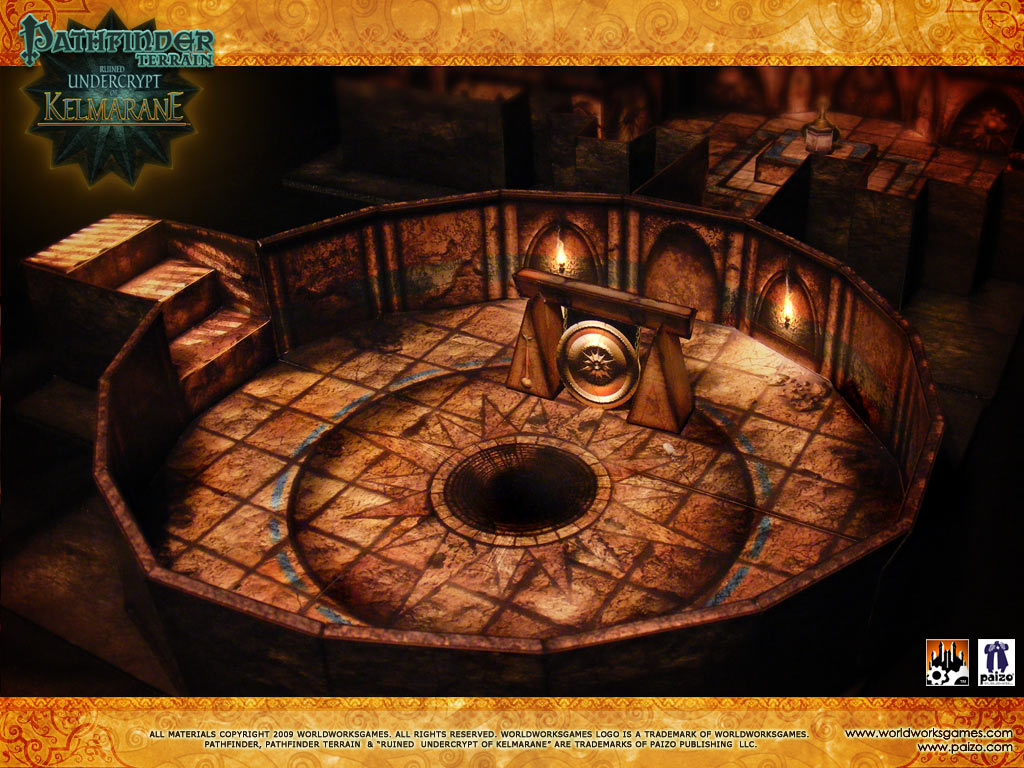
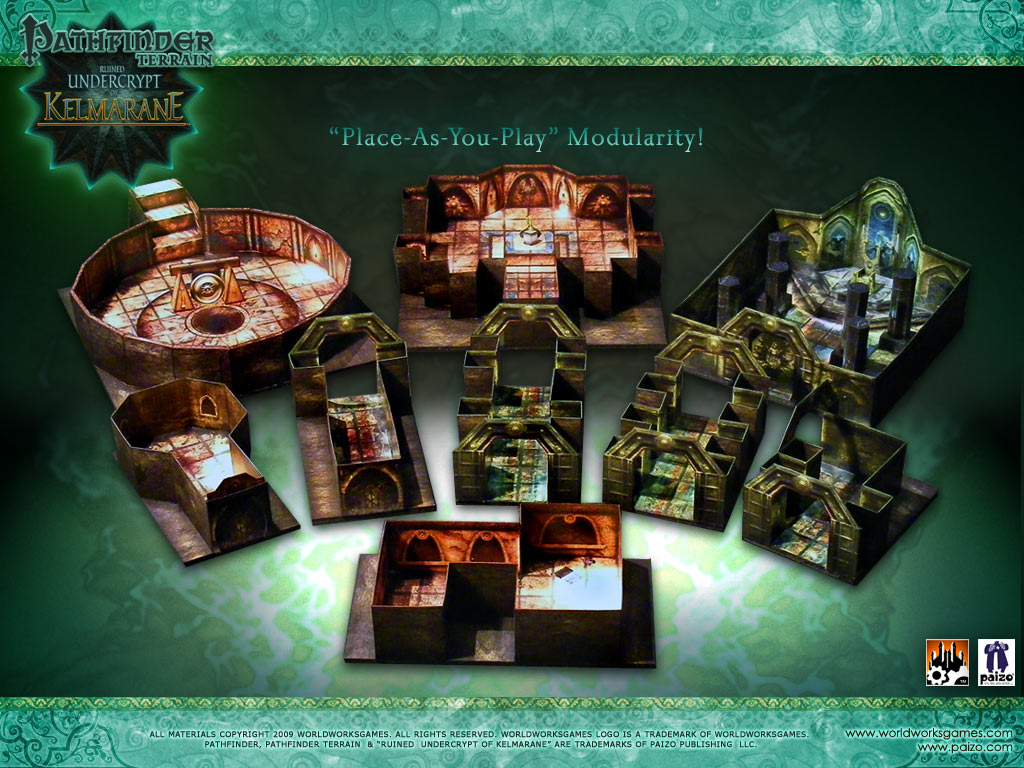
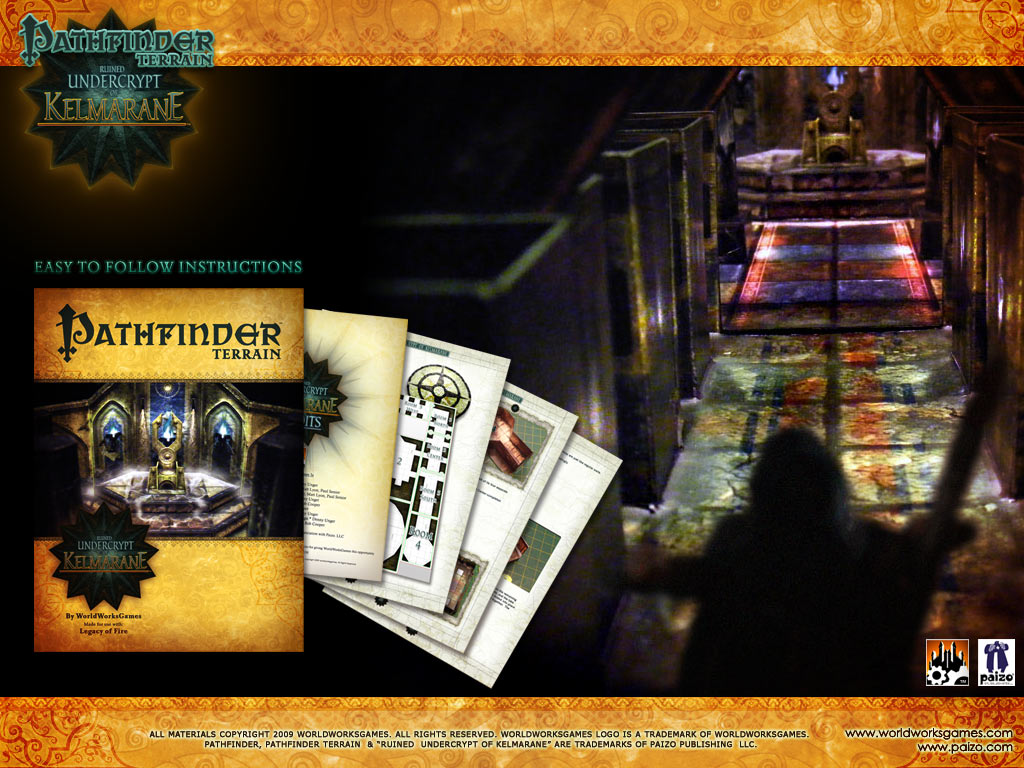
Paizo Publishing, LLC, creators of the popular Pathfinder series of tabletop fantasy roleplaying adventures and accessories, today announced a partnership with WorldWorksGames that will bring three-dimensional terrain sets to gaming tables around the world. Pathfinder Terrain will detail key encounter areas from the Legacy of Fire Pathfinder Adventure Path, with a terrain kit for each adventure. Each full-color downloadable PDF-format Pathfinder Terrain kit retails for $16.99, and will be available for purchase at paizo.com in late February 2009 and at other quality online retailers shortly thereafter. Additional releases are scheduled on a monthly basis.

The first release, Ruined Undercrypt of Kelmarane, supports the first Legacy of Fire adventure, "Howl of the Carrion King," by Paizo Publisher Erik Mona. "It's really amazing to see my dungeon come to life in glorious three dimensions," says Mona. "Gamers are going to flip with excitement when these kits hit the table. All of us at Paizo are absolutely thrilled with the quality WorldWorksGames has put into their Pathfinder Terrain kits."

WorldWorksGames is well known as an early innovator in the gaming terrain market, producing a wide range of terrain genres. An early adopter of the now popular Adobe PDF format, WorldWorksGames has established itself as one of the premier "print-build-PLAY!" terrain makers.

For further updates and or a complete catalog listing please visit paizo.com or worldworksgames.com.


ABOUT PAIZO PUBLISHING
Paizo Publishing®, LLC is a leading publisher of fantasy roleplaying games, accessories, board games, and novels. Paizo's Pathfinder® line of adventures and Pathfinder Chronicles™ campaign setting support materials combines decades of game design experience into one evocative system compatible with the 3.5 rules. Paizo's GameMastery® line offers easy-to-use tools for game masters of any fantasy roleplaying game to improve their gaming experience. Titanic Games™, Paizo's board game imprint, unleashes fun, challenging games like Kill Doctor Lucky™ and Yetisburg™ that appeal to both families and casual gamers alike. Paizo's Planet Stories® line of science fiction and fantasy novel reprints promises a master class in the genre aimed at building the greatest fantasy and science fiction library ever assembled. Paizo.com is the leading online hobby retail store, offering tens of thousands of products from a variety of publishers to customers all over the world. In the six years since its founding, Paizo Publishing has received more than a dozen major awards and has grown to become one of the most influential companies in the hobby games industry.

Hands-On: Dragon Age: Origins Hearkens Back to Fantasy RPGs of Old


By Nate Ralph


REDWOOD CITY, California — With its giant battle axes, labyrinthine dialogue trees and magical quests, the upcoming Dragon Age: Origins is a blast from ye olde past.
Were it not for the game's vastly improved visuals, you might think you had stepped back into the golden age of the late '90s, when PC gamers could put on their robes and wizard hats and fake a familiarity with the arcane Dungeons & Dragons rule set.
But much has changed in the last decade. During a recent visit to the Redwood Shores studio of the game's publisher, Electronic Arts, I played Dragon Age and once again stepped into a world swirling with magic and swordplay.
Developed by BioWare, the company known for epic, story-driven role-playing games like Baldur's Gate and Mass Effect, Dragon Age is shaping up to be a decidedly next-gen approach to the classic fantasy genre.
(Dragon Age will be released for PlayStation 3, Xbox 360 and PC in the second half of 2009. I played the PC version.)
The mere whisper of the name Baldur's Gate is likely to get more than a few role-playing fans waxing poetic. BioWare's classic RPG stole hundreds of hours of our lives, steeping players in a world rich with lore and complex combat mechanics. That we're still talking about it so many years later is a testament to the power it held over a generation. BioWare hopes to resurrect those fond memories, dubbing Dragon Age: Origins the "spiritual successor" to Baldur.
Dragon Age: Origins puts players in the boots of one of the last Grey Wardens, an ancient order of warriors sworn to protect the world from the Blight — evil monsters that once lived underground, but have risen to surface to wage war. My experience began in the encampment of the Dalish, elves who were enslaved by humans for thousands of years, but are now living life as second-class citizens. I was there to recruit fighters for an army to take on the Blight, but getting help was going to require doing a few favors.
Dragon Age is a story-driven game, which means lots of introductions to other characters, history lessons that kick-start quests and sifting through dialogue trees to chat with the populace. If you're the type of gamer who abhors anything coming between you and bludgeoning something to death, Dragon Age will be a difficult title to get through.
And don't think you can just skip through the dialogue, because it's crucial to understanding the decisions that you're asked to make during the adventure.
"There are times when you just sort of push back from the keyboard and go, 'What am I going to do here?'" says the game's executive producer, Dan Tudge. Dragon Age, he says, is a game for mature audiences — not because of blood and gore, but because of "the weight and reality of the choices you'd expect to experience in heavy situations."
In the quest I became entangled in, the Dalish leader needed the heart of the local werewolf chieftain to prevent wounded elves from becoming werewolves themselves. Sounds simple enough. But when I fought my way into the heart of the werewolves' lair, they asked me to sit down and discuss things. Without spoiling the plot, the werewolves told me that the elves weren't exactly the hapless victims they appeared to be. What call will you make?
Your in-game party can consist of a maximum of four characters. A "party approval meter" will determine how partners react to you, and is based on the actions you take during your adventure. If you kill too many innocent people, your morally correct sidekicks might ditch you. But if you play your cards right or ply characters with gifts, they might offer you a lucrative side quest, or even become a romantic interest.
Battles take place in real time, with the computer taking control of whatever players in your party you're not controlling directly. A Tactics menu allows you to program characters in your party to take specific actions when certain conditions are met. For example, if Warrior B ever falls below 50 percent health, Mage A could automatically drop whatever he or she is doing and start casting healing spells. The higher your character's level, the more Tactics you'll be able to assign.
While BioWare has abandoned the traditional Dungeons & Dragons rule set in favor of its own system, it has kept the Pause function that defined the combat in the developer's earlier games — simply tap the space bar and you'll be able to stop the action, allowing you to assign commands to your characters and observe how the battle is going.
Modern, next-gen influences include quick recovery of health and mana as opposed to having to rest at inns. There's also a cool-down period after you cast spells — players familiar with World of Warcraft's combat mechanics will find the skills they've picked up managing toolbars coming in quite handy.
BioWare plans to let players craft their own adventures. The Dragon Age Toolset will allow users to modify the game by crafting new worlds and changing the characters' and enemies' AI, then share their designs with the community.
But Dragon Age won't offer a multiplayer mode, which might offend players who shared their Baldur's Gate experience with friends. Tudge explained that while BioWare is currently fully devoted to the single-player experience, there is a good chance we'll see multiplayer components in the Dragon Age universe somewhere down the road.
With a role-playing game of this scale, it's difficult to form any concrete impressions from a brief demo, but from what we can observe right now, Dragon Age: Origins is shaping up to be an epic experience.
Images courtesy BioWare

Top 10 D&D CRPGs


This is a brilliant guest post on DUNGEON MASTERING by Mr. Gnome from The Random Gnome’s Random Lair. For hours of computer- and retro-gaming goodness be sure to check out his site.

The digital world of Dungeons & Dragons

Truth be said, computers do face quite a few problems when striving to provide us with proper RPG experiences. That’s, I guess, why we needed this CRPG term. Just to make sure roleplayers never raised their expectations too much. On the other hand, them CRPGs do tend to handle combat particularly well, and if you’re a munchkin you don’t really care for the RPG part of RPG gaming, do you? Then again, you might care but lack the time to gather half a dozen people to play. And a good story always is a good story.
Anyway. Enough with the intro bit. What follows is a selection of 10 of the best Dungeons & Dragons CRPGs presented for your enjoyment in the rather rare reverse chronological order.

Neverwinter Nights 2

Published by Atari
Developed by Obsidian
Released: 2006
Ruleset: D&D 3.5
Setting: Forgotten Realms
More info:
Official Site, MobyGames, Wikipedia, GameRankings

NWN2Following the original BioWare developed and immensely successful Neverwinter Nights, NWN 2 improved the game in every respect and provided us with a shining gem in all its action-focused, story-heavy, dungeon crawling glory. The visuals are nothing short of jaw-dropping, the music is superb, the available options ridiculously varied, the gameplay perfectly balanced and the plot appropriately epic, though admittedly quite a bit on the generic side of things. What’s more, and besides the replayability of the thing, NWN 2 can double as an impressive DM’s tool. Heck, there’s even a properly funny gnome bard thrown in for comic relief. Just remember to patch it before you start playing. Oh, and you’ll need a decent PC to enjoy it too.

The Temple of Elemental Evil

Published by Atari
Developed by Troika
Released: 2003
Ruleset: D&D 3.5
Setting: Greyhawk
More info:
Official Site (archived), MobyGames, Wikipedia, Sorcerer’s Place, Game Rankings

ToEETroika Games, the developers of The Temple of Elemental Evil are apparently no more, and if you have actually played any of their games, you are probably very sad about it; just like I am. If not, you should be. After all, they are the only team to attempt such a faithful implementation of the 3.5 edition rules while recreating this rather classic D&D adventure. Ok, so the plot development isn’t brilliant with its standard evil rising theme and the game did ship with its fare share of bugs, but what really stands out, the turn-based combat system, will more than make it up for you. As for the party of five the player leads through Greyhawk, it interestingly has an alignment which affects both the plot and the available choices. Mind you, ToEE still has a vibrant, creative and very active fanbase, that constantly comes up with new bug-fixes, enhancements and extra content.

Icewind Dale: Heart of Winter

Published by Interplay
Developed by Black Isle Studios
Released: 2001
Ruleset: D&D 3rd edition
Setting: Forgotten Realms
More info:
MobyGames, Wikipedia, Game Rankings

iwdhow.jpgYes, it’s an expansion for Icewind Dale, I know, but it’s such a glorious one it’s worthy of its very own mention. Changes include such things as the addition of several types of classic Dungeons & Dragons critters, a higher experience point cap, new magical items and the much needed option to play in a resolution higher than 640×480. Heart of Winter, with its basic though definitely grand plot, focuses on epic battles and intense (!) spell casting. Guess it’s something like hack-‘n’-slash for wizards really. Great fun and will last you for quite a while too.

Planescape: Torment

Published by Interplay
Developed by Black Isle Studios
Released: 1999
Ruleset: AD&D 2nd edition – heavily modified
Setting: Planescape
More info:
Official Site (archived), MobyGames, Wikipedia, Planewalker, The Escapist, Game Rankings

planescape.jpgIf there is one game that really (and I do mean really) puts an emphasis on storytelling, reading of extensive texts, plot twists, literary pleasures and non-combat focused gameplay, well, as you might have guessed, Planescape Torment has to be that game. Now, I do not want to spoil anything from its great story, but do know that there’s a brothel of intellectual delights to be visited, death plays a prominent role, the atmosphere is absolutely impressive and the bits of included humor actually work. After all, Planescape Torment, frankly, is way above the average D&D novel in terms of writing quality, character development and of course plot. It’s no Dostoyevsky of course, but no Salvatore (and I don’t mean that in a good way) either.
On the more mundane side of things, Torment is based on the Infinity Engine, meaning it features some of the best 2D environments possible and plays like a cross between an adventure and an RPG. Also, players don’t get to choose their party –it would definitely hamper storytelling- but they do get to pick some of the characters they’ll recruit and join a variety of factions from the Anarchists, to the Dustmen, the Sensates and more.

Baldur’s Gate

Published by Interplay
Developed by Bioware
Released: 1998
Ruleset: AD&D 2nd edition
Setting: Forgotten Realms
More info:
Official Site, MobyGames, Wikipedia, Planet Baldur’s Gate, Game Rankings

bg.jpgBaldur’s Gate, slightly flawed as it is, was the CRPG behemoth that kick started the genre renaissance of the late nineties and is still considered one of the best single player RPGs money can buy. The story is decent and, combined with the rich world of the Forgotten Realms, provides with the perfect canvas for character development and –admittedly- gratuitous goblin murdering. There are literally tons of battles, both random and staged, to fight, tons of dialogue to wade through and a moral system in the spirit of the game’s Nietzsche inspired slogan: “He who fights with monsters should look to it that he himself does not become a monster…”. Oh, and so you know, two of Baldur’s biggest key selling points were (arguably still are) the intuitive real time combat system and an absolutely huge quest taking place over the entire –and very lovely- Sword Coast. Now, care for a bit of trivia? Good. Baldur’s Gate actually is the name of the sprawling fantasy metropolis part of the game takes place in.

Ravenloft: Strahd’s Possession

Published by SSI
Developed by Dreamforge
Released: 1994
Ruleset: AD&D 2nd edition
Setting: Ravenloft
More info:
MobyGames, YouTube, Quandary review

ravenloft.jpgI remember feeling that weird sort of melancholy invented worlds tend to inspire when you realize they don’t actually exist when I first read through the original AD&D 2nd edition Ravenloft box set. It really was that good a romantic masterpiece, filled with incredibly powerful yet cursed characters, a dark history, imaginative realms and a deep sense of dread. Yet, I never played a Ravenloft session. Always thought it would have to be too epic to really matter. Well, Strahd’s Possession is epic. A bit too epic to be frank, and I do mean this in a setting altering way, but it still offers a passable story and a chance at some truly atmospheric computer gaming. Happily, it also offers a pretty innovative for its time full 3D world viewed in first person perspective and a healthy dose of dark gothic atmosphere. Oh, yes, and some appropriately cryptic Vistani too.

The Dark Queen of Krynn

Published by SSI
Developed by MicroMagic
Released: 1992
Ruleset: AD&D 2nd edition
Setting: Dragonlance
More info:
MobyGames, Wikipedia

dqok.jpgA classic. A true masterpiece. A technical achievement. A game that just can’t age and a brilliant dungeon hacking romp that enthralled (parts of) humanity and quite obviously me. Also the last installment in the Dragonlance based Krynn trilogy of games that were released as part of the aforementioned Gold Box series. Evil (well, the aptly named Dark Queen herself actually), you see, even after being defeated twice, just couldn’t leave Krynn alone and a band of adventurers just had to stop her. In a glorious 256-colours VGA world with SoundBlaster support, no less.

Eye of the Beholder

Published by SSI
Developed by Westwood Studios
Released: 1991
Ruleset: AD&D 2nd edition
Setting: Forgotten Realms
More info:
MobyGames, Wikipedia, Game Rankings

eotb.jpgAnother megahit and a respected award-winner from the era when gamers bothered with exercising their imagination. An era when pen and paper were the only way to map a game. Eye of the Beholder, not unlike Dungeon Master before it, was one of the earlier first person RPGs with a then-impressive 3D tile-based graphics engine. The title, as retro gaming CRPGers should remember, refers to the game’s final adversary, a nasty monster, gamers and their party of four would only reach after fighting a thousand battles, making friends with an assortment of dwarfs, murdering the odd Drow, casting roughly 40 different spells and solving lots of taxing puzzles in the sewers of Waterdeep. Eye of the Beholder was successful enough to spawn two sequels, quite a few spin-offs and port itself to everything from the Amiga and the Sega (Mega) CD to the Atari Lynx and the SNES.

Pool of Radiance

Published & Developed by SSI
Released: 1988
Ruleset: AD&D 1st edition
Setting:
More info:
MobyGames, Wikipedia, Dragonbait’s Page, GameBanshee

por.jpgPool of Radiance was the first of a long and brilliant series of RPGs that shared a common graphics engine and common gameplay mechanics, and came to be collectively known as the Gold Box series. Must have been the gold boxes in which the games came, methinks. Anyway. Point is, Pool of Radiance is a legend and a 20-year old game everyone with the slightest interest in CRPGs and their heritage should play, even though admittedly some of the later Gold Box games actually bested it. Still, not many of them received the accolade of being called “the best RPG ever to grace the C64, or indeed any other computer” by Commodore User magazine. http://en.wikipedia.org/wiki/Pool_of_Radiance - _note-0The game only allowed fighter, cleric, wizard and thief and severely restricted them in their level advancement, but its combination of first person dungeon exploring with 3rd person turn-based combat and the official endorsement of TSR made sure it was years before anyone actually noticed it.

Advanced Dungeons & Dragons: Cloudy Mountain

Published & Developed by Mattel
Released: 1982
Ruleset: AD&D 1st edition
Setting: none in particular
More info:
MobyGames, YouTube, IntelliVision Lives, Video Game Critic

addcm.jpgI’m not 100% sure on what exactly this Intellivision game is called, though its loading screen does imply that Advanced Dungeons & Dragons should be enough, but I do know it’s not the first D&D game ever. 1974, you see, saw the release of dnd, which being playable only on a mainframe failed to reach a wide demographic. Not that this game did, but, well, at least it tried. Originally being worked on under the title of “Adventure” until TSR licensed the game, AD&D was the first Intellivision cartridge to use more than 4kb of ROM and feature randomly generated mazes stuffed with monsters, in what could easily be described as Diablo’s great grandfather. I’d suggest tracking a copy of the thing online and actually seeing how impressively innovative it was. Finding a free copy shouldn’t be too difficult, even if your reward would have you recovering the two pieces of the rather silly-named Crown of Kings.

What are your top CRPGs?

Let us know what kept you enthralled for social-life-mangling weeks!

DDO: Stormreach Chronicle is Live


Welcome to the Chronicle - a weekly look at what's happening around the forums! Read on for tips, community spotlights, Turbine info, and more!
Letter from the Editors
"People have been very creative this week! From awesome videos to festive cookies, we're very pleased to see so many wonderful creations by our DDO players. Starting with next week's Chronicle, we'll be featuring these great player efforts in a new segment called "Community Spotlight". Additionally, the Chronicle will be getting a face lift, so get ready for a new look for the new year!"
- The DDO Community Team
Guild Hall
The following guilds are looking for more adventurers. Learn more about them here!
Shriners Anonymous, of the Argonnessen server
Compendium Page: http://compendium.ddo.com/wiki/Shriners_Anonymous
"Small guild with many oldstyle D&D players from the "Chainmail" era of D&D. Low-drama, fun-loving, mature, cooperative gaming. Shriners Anonymous is not particularly end-game or raid-oriented (well, except for a couple of us. They are allied with The Order of the Silver Dragons)."
Lifetakers and Heartbreakers, of the Ghallanda server
Compendium Page: http://compendium.ddo.com/wiki/Lifet..._Heartbreakers
"Fun: We like getting experience points and quality loot as much as the next player, but the enjoyment of playing the game and the camaraderie it brings remain our primary goals.
Reality: We know that real life comes first. If your spouse/kids need you, work calls or you need to drop off in the middle of an adventure due to a real-life crisis, we understand. We'll wait if necessary. We have grown to be such a close-knit group of friends that we'll have plenty to talk about in the meantime... "
Fallen Heroes, of the Khyber server
Compendium Page: http://compendium.ddo.com/wiki/Fallen_Heroes_Khyber
"The heroes are a guild of young yet mature players. Born on the server Reidra, it comprises a mix of frequent/casual seasoned veterans and new gamers with it's primary role of people come first and a focus on fun for all. "
Inmates of Stormreach, of the Sarlona server
Recruitment Thread: http://forums.ddo.com/showthread.php?t=170325
"we're not the uberist of the uber, but when it comes to having fun, i think we're among the top tier we are the lightning 2's of the fun crowd.
so, if you are looking for just a fun loving guild, or just something new to try out... feel free to come on over, or bring an alt in to test the waters..."
The Order of the Sword and Rose, of the Thelanis server
Compendium Page: http://compendium.ddo.com/wiki/The_O...Sword_and_Rose
"A guild for mature roleplaying gamers and storytellers!"
Over 500 guilds have pages available in the Compendium! Read more about guilds in the Compendium by clicking here!
Looking for a guild? Looking for recruits? Be sure to visit the Guild Matchup forum!
Have a guild you want featured? Send Tolero and Tarrant a PM with a short description of your guild and a link to your recruitment thread or Compendium page!

Dragon Age


Ferelden. A dark and foreboding place, where death and violence lurks in every shadow. A troubled world, where even the brightest light can often find itself extinguished by the ever encroaching darkness.
Civilization has fought for many centuries to hold the shadows at bay, but even now the mighty walls of Ostagar are beginning to crumble against the onslaught of an ancient threat. The darkspawn have returned again to bring their taint to the land, and this time, their ancient adversary, the Grey Wardens, have been left neglected by a complacent world that felt they no longer needed them. The fate of the world hangs in the balance, as these mighty warriors again take their place on the front lines against the Blight. But powerful as they are, their numbers have dwindled, and the time is near that a champion needs to step forward from their ranks and lead them to victory. But will the success of this Grey Warden ensure a new, brighter future for Ferelden, or be the first bloody step into a more perilous future?


History

Ostagar

Representing the furthest point of encroachment by the ancient Tevinter Imperium into the barbarian lands of the southeast, the fortress of Ostagar was once one of the most important defensive Imperial holdings south of the Waking Sea. It stood at the edge of the Korcari Wilds and watched for any signs of invasion by the barbarians today known as the Chasind wilders. Straddling a narrow pass in the hills, the fortress needed to be by-passed in order for the WIlders to reach the fertile lowlands to the north and proved to be exceedingly difficult for the Wilders to attack due to its naturally defensible position. Like most Imperial holdings in the south, Ostagar was abandoned after Tevinter's collapse during the First Blight. It was successfully sacked by the Chasind wilders and then, as the Chasind threat dwindled following the creation of the modern Ferelden nation, fell to ruin completely.
It has remained unmanned for four centuries, though most of the walls still stand -- as does the tall Tower of Ishal, named after the great Archon that ordered its construction -- and Ostagar remains a testament to the magical power of the Imperium that created it.

The Blight

The Chantry teaches that it is the hubris of men that brought the darkspawn into our world. Mages sought to usurp Heaven, but were cast out, twisted by their own corruption, only to return as monsters--the first of the darkspawn. They plague the underground caverns and tunnels once inhabited by the dwarven kingdoms. When they discover one of the Old Gods, ancient dragons slumbering in the depths of the earth, it rises as an archdemon to lead the darkspawn as they spread like locusts across the surface lands, destroying all in their path: a Blight. It has been four centuries since the last Blight, but the darkspawn are amassing once again.

Grey Wardens

They are the most elite and feared of warriors, dedicated to the destruction of darkspawn in all human lands. The centuries of peace have left them all but forgotten. The Grey Wardens have kept watch through the ages, well aware that peace is fleeting, and that their enemy will never truly be defeated until the last of the Old Gods has been slain.

DUNGEONS & DRAGONS TACTICS


Dungeons & Dragons Tactics is a tactical role-playing game released on the PlayStation Portable handheld video game console. It is set in the world of Dungeons & Dragons and uses a strict interpretation of the Dungeons & Dragons 3.5 Edition rule set.

Overview

In the campaign storyline, players lead a party of adventurers on their quest to investigate an ancient being, about which little beyond the name is initially known. The plot is eventually revealed to be an epic contest between two dragons competing for godhood. The player can choose the path of good or evil, with different quests available depending on which is preferred, although the distinction between the two is not always clear. The game is divided up into a number of distinct battles or missions (30+), with the player able to access the majority of these during a given campaign, since several of the scenarios are mutually exclusive. Scenarios cannot be re-played once successfully completed.

The campaign revolves around a single lead character, with the other characters playing a supporting role. At the start of each scenario or battle, players select which additional adventurers to take along (up to a total of five such auxiliary characters after the first few scenarios). While this technically allows one to have more than six adventurers, only characters who actually participate in a given battle earn experience, so attempting to field a larger stable of cohorts serves to dilute earned experience levels.

The game features the core character classes from the D&D rulebook: the Barbarian, Bard, Cleric, Druid, Fighter, Monk, Paladin, Ranger, Rogue, Sorcerer, and Wizard, as well as two non-core classes, the Psion and Psychic Warrior. A full set of character generation rules permit players to create their own characters, or use pre-generated characters selected from a "character library".

Gameplay

Dungeons & Dragons Tactics makes use of a simple overworld map between battles. The map shows key locations of interest, with the party's current location depicted by a flag icon. While a few cutscenes are triggered upon entering certain locations, in general, the party is free to move to any known location. There is no notion of time associated with movement, and there are no random encounters. At some locations, players can buy additional goods, and can always trade items between characters or adjust character equipment. When a battle or mission is available at a given location, the "Adventure" action is presented, allowing players to undertake the indicated scenario.

Once a scenario begins, the player forms a party from the available characters, and the game then switches to adventuring mode. In this mode, the party and surroundings are displayed using a zoomed-in bird's eye view. The camera can be rotated using the right thumbstick and the map scrolled as desired, although only features (e.g. monsters) which characters can currently see are shown. In dimly lit environments, torches or the use of darkvision are required to achieve full visibility.

The game uses a menu-based action system, where a character is selected and his or her actions are then selected from a series of branching menu options. In "exploration mode", where no monsters are currently nearby, characters can take turns in any order, with the same character able to act again and again if desired. The party can also rest in this mode, restoring all spells and hitpoints. However, once a monster is observed or becomes aware of the party, the game switches to a standard initiative-based Dungeons & Dragons turn system. After all such enemies are defeated, the game returns to exploration mode. This cycle continues until either the party leader is defeated, or the completion conditions for the scenario are fulfilled.

While a few magical items are awarded for completing certain scenarios, most such treasure is stored in chests discovered during scenarios. These chests must be opened and their contents removed during the course of a mission if the characters are to make use of them. If a scenario is completed before such chests are open, their contents are lost forever. As characters cannot trade items amongst themselves during an adventure, weaker characters can easily become overloaded if they pick up a sufficiently heavy quantity of equipment.

#

This game was made for the DND experience, and for the fans. Maybe that is why it is quite frustrating for newbies who haven't got a clue of the pen and paper game, and perhaps that’s the reason why one would complain about the menu interface and the camera angles, or I’ve read one suggested that there should be an arrow pointing to where the enemy lies and where to go. his game is not a hack and slash game, nor its just about getting powerful and hitting combos, this game tries to impart what would you do in a DND game, which is, you explore and make decisions, that is why you may not see through the horizon because your character is at a humanly height not a towering giant, and you'll stumble in a dungeon because it’s a dungeon. The developers made a exciting effort for anyone to try DND for the PSP, and I’m glad that it’s not just another Final Fantasy clone. I do reckon the game was passionately made, and if you’re not up with the 3.5 rule book and this game is not for you

Game Informer Online: Storm of Zehir


Do you know the mechanical differences between Sorcerer and Wizard spellcasting in 3rd Edition Dungeons & Dragons? How about the exception to the basic rule about stacking bonuses to a single die roll? If you know what I’m talking about, this new expansion for Neverwinter Nights 2 is for you. Gamers who don’t know the difference between a fireball and a fireburst may as well turn the page, because there is nothing for you here.
Storm of Zehir has players create a four-person party of adventurers (a first for the series) and dumps them in the middle of a hostile landscape, where the heroes forge alliances with dubious powers and rely on spells and blade skills to survive daily life. A spiffy new overland map makes use of the party’s secondary skills like survival, spot, and listen, along with giving players a ton of real estate to search for and inevitably find dungeons, treasure, and monsters aplenty. Since resting is no longer trivial, building a party that can handle the challenges without blowing through half its spells every time it comes across a wandering group of kobolds (and believe me, you’ll find lots) is critical.
via Game Informer Online.

Dungeons and Dragons: Tower of Doom


Editor/ Dungeons & Dragons: Tower of Doom is the first of two arcade games created by Capcom and based on the Dungeons & Dragons role-playing game. The game was also released on the Sega Saturn, packaged with its sequel, Dungeons & Dragons: Shadow over Mystara, under the title Dungeons & Dragons Collection, although the Saturn version limited the gameplay to only 2 players. The game is set in the Mystara campaign setting.
Tower of Doom is a side scrolling beat em up with some RPG elements mixed in. Notable bosses include a troll that regenerates unless burned, a large black dragon, the dreaded Shadow Elf (Mystaras equivalent of the drow), a beholder, the optional superboss Flamewing (a great wyrm red dragon) and the final boss Deimos (an archlich).
The gameplay is more technical than the average on beatem up games. In addition to the usual basic attacks and jumping it includes blocking, strong attacks, turning attacks, dashing attacks, crouching and evading. It also requires the use of careful tactics, as most enemies have the same abilities as the heroes and can outreach them, too.
As important as melee combat is ranged combat and the use of spells. Daggers, hammers, arrows and burning oils can be used as throwing weapons, and many enemies have similar weapons. Spells can be used by means of magical rings or by the two playable spellcasters (a cleric and a fighter/mage).
via Dungeons and Dragons: Tower of Doom -

NEVERWINTER NIGHTS 2: STORM OF ZEHIR INTERVIEW


These pics are of Yuan-ti not of the game!


Strategy Informer: Storm of Zehir is rumored to be much like Icewind Dale and Baldur’s Gate in terms of its non-linear progression. Exactly how much space will players have to navigate without being tied to any story objectives?


Kevin Saunders: That’s true – Lead Designer Tony Evans has taken Storm of Zehir in a more non-linear direction than previous Neverwinter Nights games. In that regard, SoZ is more similar to a game like Fallout - there’s a plot and objectives, but you’re free to explore the game world however you wish.


Strategy Informer: We’ve read that you may have run into some time crunches towards the end of the development cycle with the first expansion pack Mask of the Betrayer, including losing a mission called “Patron of the Arts.” Will we see some sort of revival for that quest or any of the other content that may have been cut from Mask of the Betrayer?


Kevin Saunders: Nope – all of the Storm of Zehir content is brand new! To clarify, no developed content was really cut from Mask of the Betrayer – there are always more ideas than you have time to implement and you have to pick and choose what you actually put into the game. Anything that we considered for MotB but didn’t implement wouldn’t be as beneficial for Storm of Zehir than new content we came up with specifically for this game.


Strategy Informer: How will the new D&D 4th edition rules work into Storm of Zehir? Wizards of the Coast maintains that the 4th edition is easier to pick up, play, and learn. Will Storm of Zehir welcome newcomers as much as entertain loyalists?


Kevin Saunders: In terms of game rules, Storm of Zehir is strictly a 3.5 Edition D&D game. We would love to create a 4th Edition D&D game, but that’s simply a bigger undertaking than an expansion can tackle. That said, you will find 4th Edition story tie-ins in SoZ. Besides just changing the rules, Wizards of the Coast also altered the Forgotten Realms setting with 4th Edition. Storm of Zehir takes place before the Spellplague and has some foreshadowing of the events that lead to 4th Edition.


Strategy Informer: Will you be able to import your character from previous Neverwinter Nights 2 campaigns into Storm of Zehir? If so, will it be a clean slate with the party?


Kevin Saunders: Storm of Zehir is intended to be played with a new party of low level characters. Neverwinter Nights 2 is a flexible game and from a technical perspective, you could bring your high level characters in SoZ.


Strategy Informer: What sort of graphical overhaul or tweaking can we expect from the new expansion pack?


Kevin Saunders: The Overland Map has a different graphical style than you've seen in NWN2 and MotB. Developed by artists Scott Everts and Justin Cherry, it's more stylized and less "realistic." The adventure areas themselves use new lighting techniques we've developed over the course of creating the previous games. NWN2 artists Jay Bakke and Roger Chang have created some great looking locations, as you'll soon see when we start releasing screenshots.


Strategy Informer: Can we expect the level cap to raise? If so, what will be affected?


Kevin Saunders: Storm of Zehir has the same level cap as Mask of the Betrayer – 30. With its open-ended exploration gameplay, you can certainly reach epic levels in SoZ, but it’s also possible to “win” the game earlier than that. We felt that players would prefer our concentrating on improving other aspects of the NWN2 experience rather than extending the level cap beyond 30. Level 30 is already extreme for D&D (in fact, 4th Edition currently ends at 30).


Strategy Informer: Can you give us any sort of clue as to the story of Storm of Zehir?


Kevin Saunders: Well, Zehir is mentioned briefly in the 4th Edition Player’s Handbook. =)


Strategy Informer: Has a release date been finalized yet?

Kevin Saunders: I believe that what has been announced is Q4 2008 – so by the end of the year. We can't comment on an exact date.


Strategy Informer: How long do you plan to keep supporting Neverwinter Nights 2 with additional expansion packs?


Kevin Saunders: There are many people at each Atari and Obsidian who love D&D and love Neverwinter Nights 2. Continuing to support NWN2 is definitely of interest to us. But regardless of what one might personally want to create, we also have to consider financial realities - like everyone else, game developers have families to feed. Mask of the Betrayer exceeded sales projections; if Storm of Zehir is also well received, that would create a strong argument for a third expansion.


Strategy Informer: Is there anything else you'd like to say before we close this interview?


Kevin Saunders: Thank you for your time and interest in D&D, Neverwinter Nights 2, and Obsidian. You’re the reason we make these games. =)


Follow on LINK